[Case Study 01]
Simplifying Warehouse Receiving
Logistics & Supply Chain
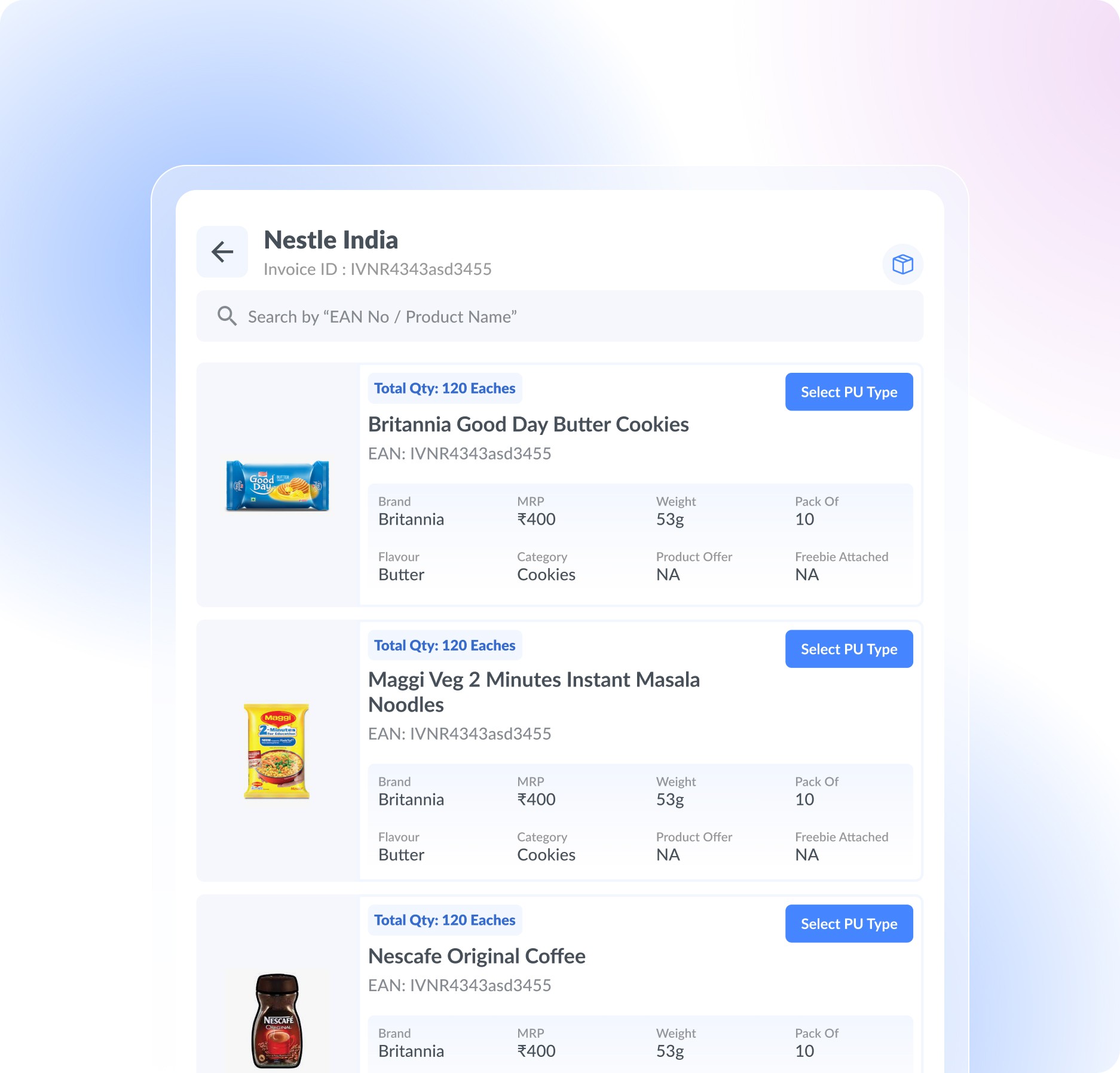
85% Faster Item Verification with a Streamlined Receiving Flow
Revamping warehouse operations to check products faster, cut errors, and boost daily efficiency.
[Project Overview]
Redesigned warehouse workflows to speed up product checks, cut delays, reduce manual errors, and boost overall operational efficiency.
[Problem Statement]
The warehouse’s in-warding process combined inefficient paper-based tasks with an outdated, error-prone tablet design — resulting in wasted time, delays, high manpower requirements, and frequent mistakes. Limited device compatibility, poor usability, and long training times further slowed operations. This project aimed to streamline workflows and modernize the interface to improve speed, accuracy, and scalability.
[Industry]
Logistics & Supply Chain
[My Role]
Product Designer II
[Platforms]
Tablet and Desktop
[Timeline]
3 months
[Persona]

Arun Prakash
Warehouse picker
I just want to verify the items quickly without any mistakes.
Age: 25
Location: New York City
Tech Proficiency: Moderate
Gender: Male
[Goal]
Quickly verify received items during inwarding
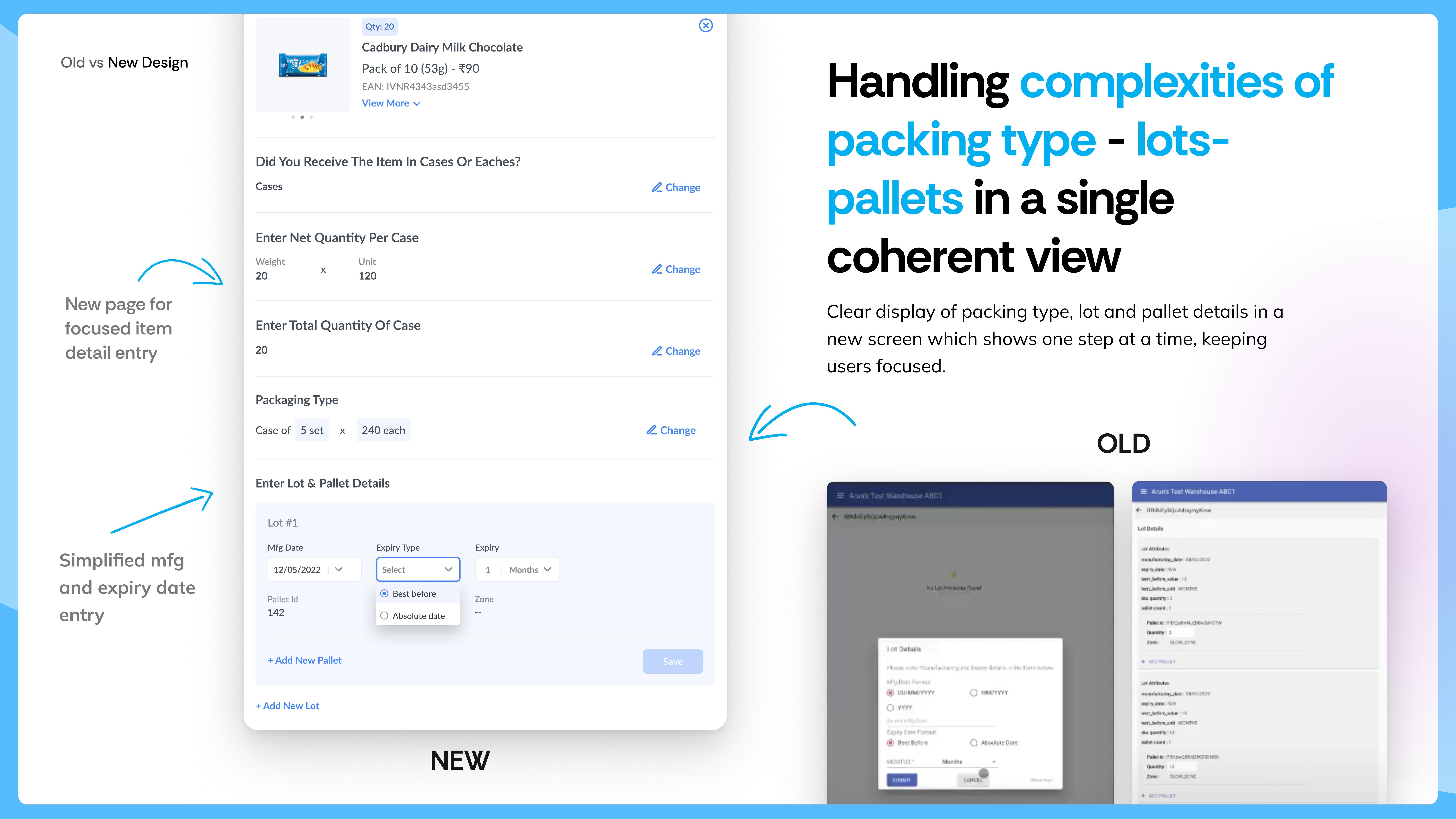
Identify correct packaging units
Avoid mistakes that lead to rework
[Frustrations]
No product images leading to wrong selections
Manually identifying and marking items on paper
Difficulty in identifying different pack sizes
[Process]
On-Site Research
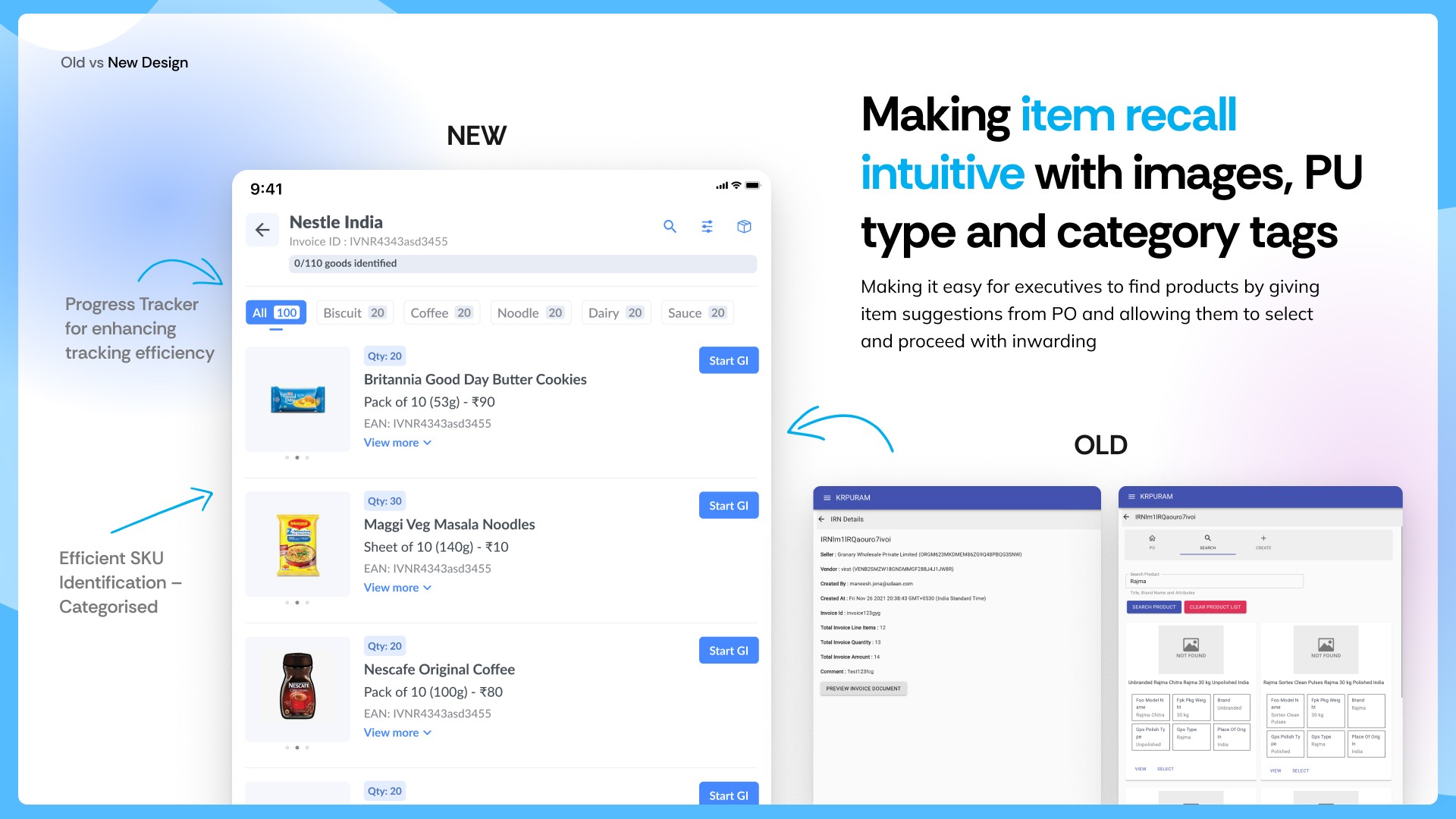
Lack of clear visual references made product selection confusing and increased the chances of mistakes
Manual, handwritten logs frequently caused data entry mistakes, miscommunication, and costly errors.
30% of in-warding errors were due to incorrect Packaging Unit selection.
Gap Analysis
Lack of standardisation – Different naming conventions for similar items caused inconsistencies.
Manual product selection typically took around 90 seconds per item, adding up significant time losses.
One in four items was mismatched or misplaced due to packaging similarities and lack of clear checks.
User Flow Optimization
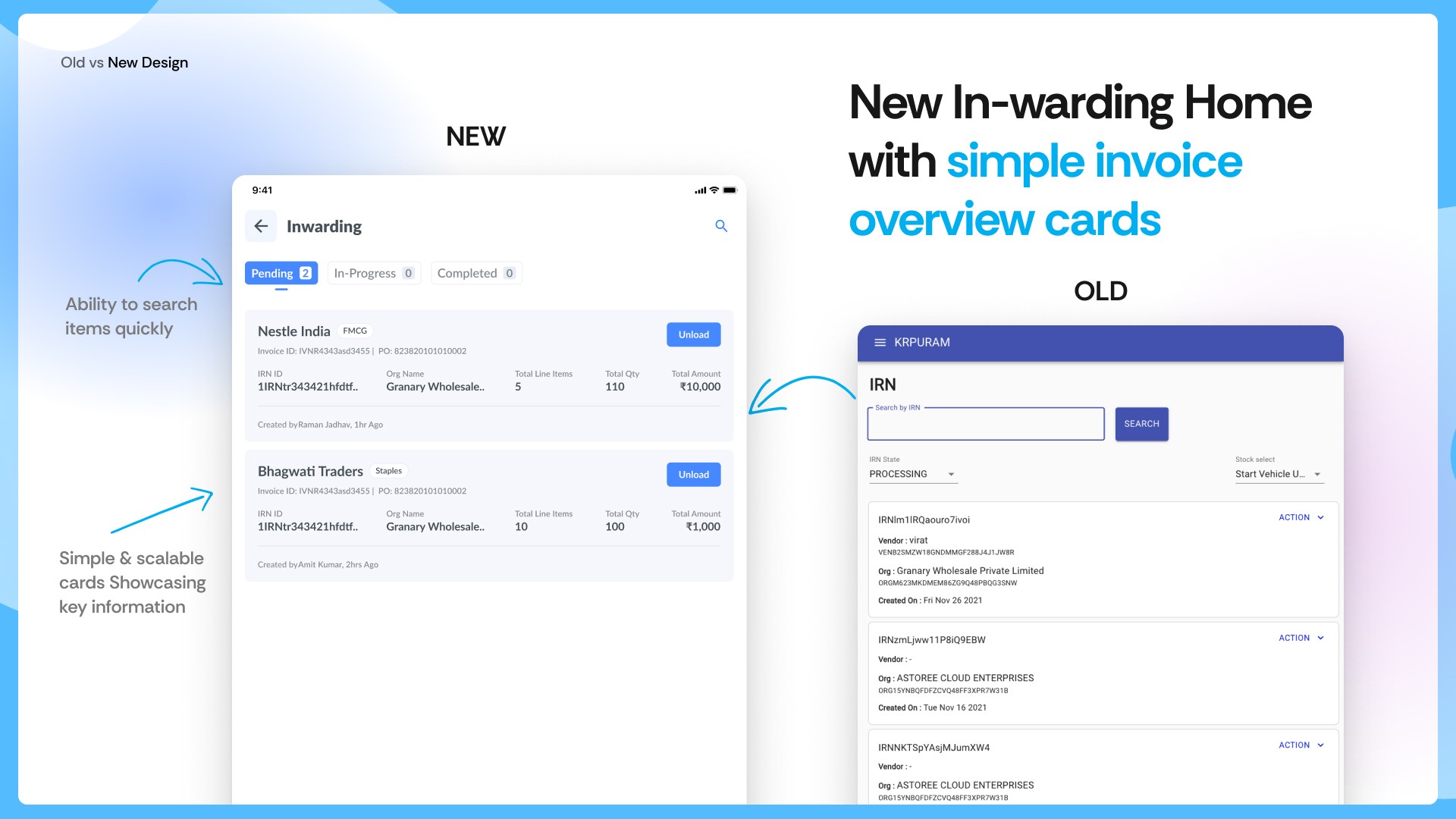
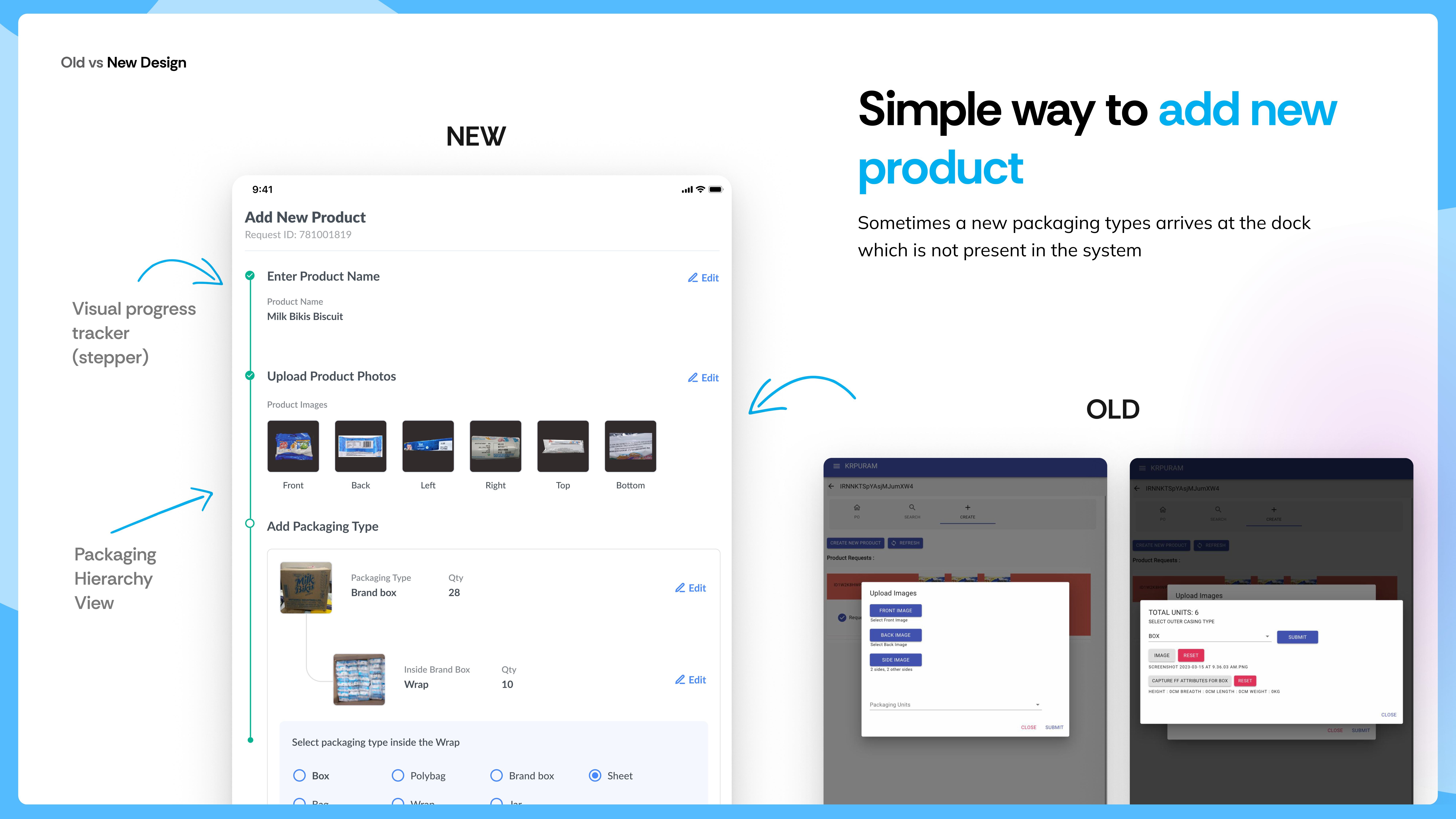
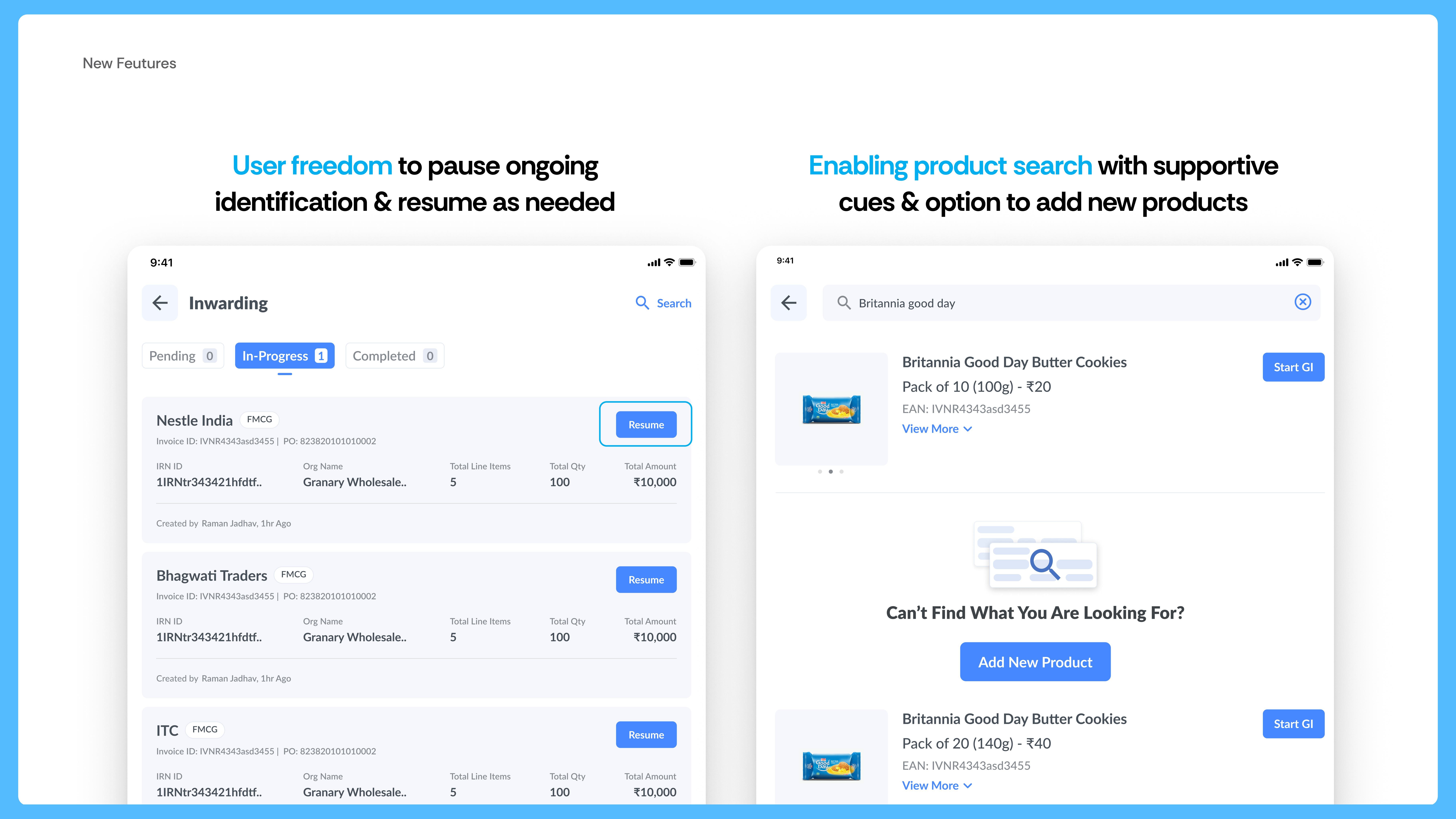
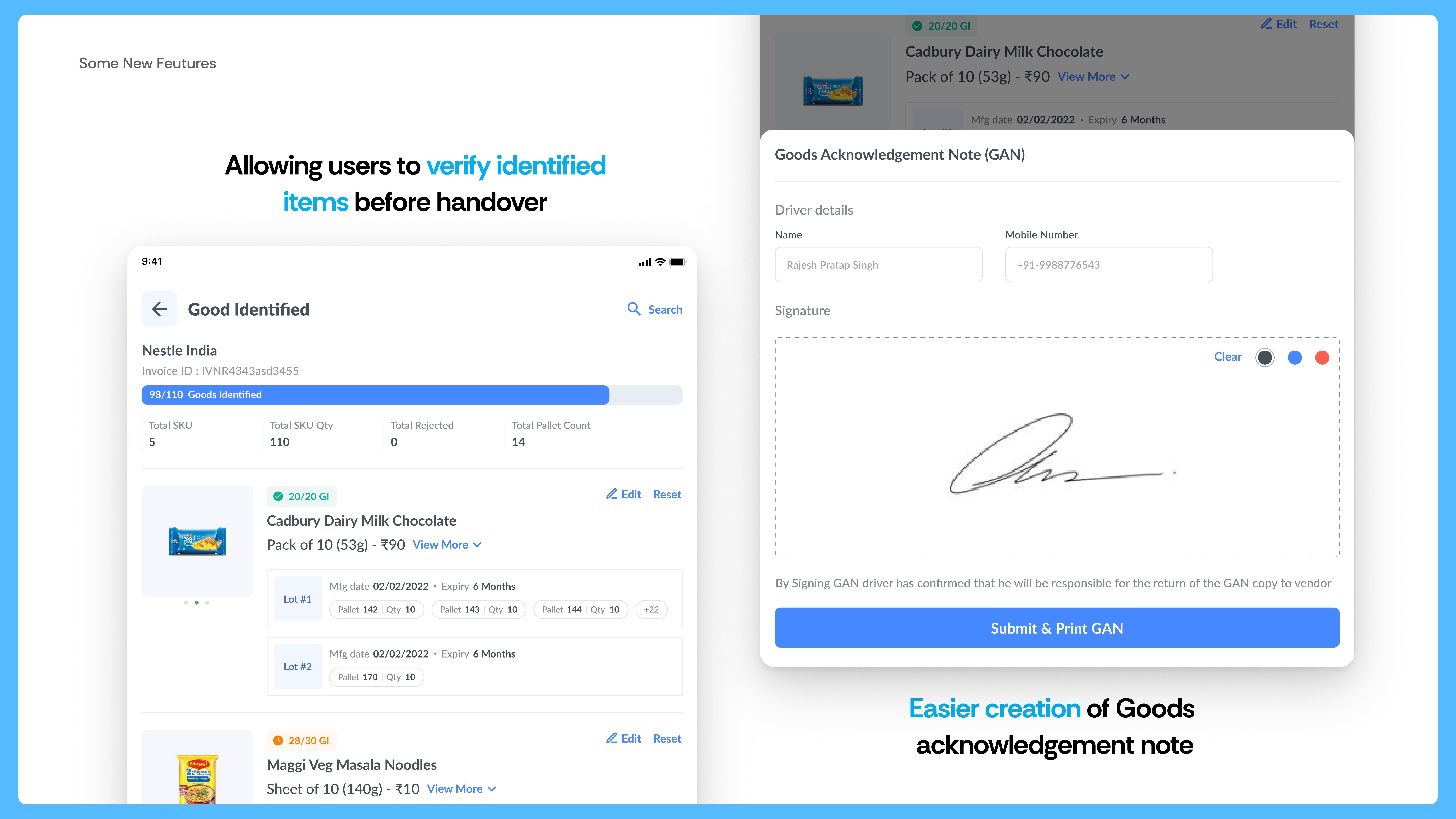
Redesigned the user journey to remove redundant steps and speed up tasks.
Created simple, intuitive workflows to ease onboarding and reduce paper reliance.
Improved accessibility for users with varying tech skills to ensure smooth adoption.
Design Exploration
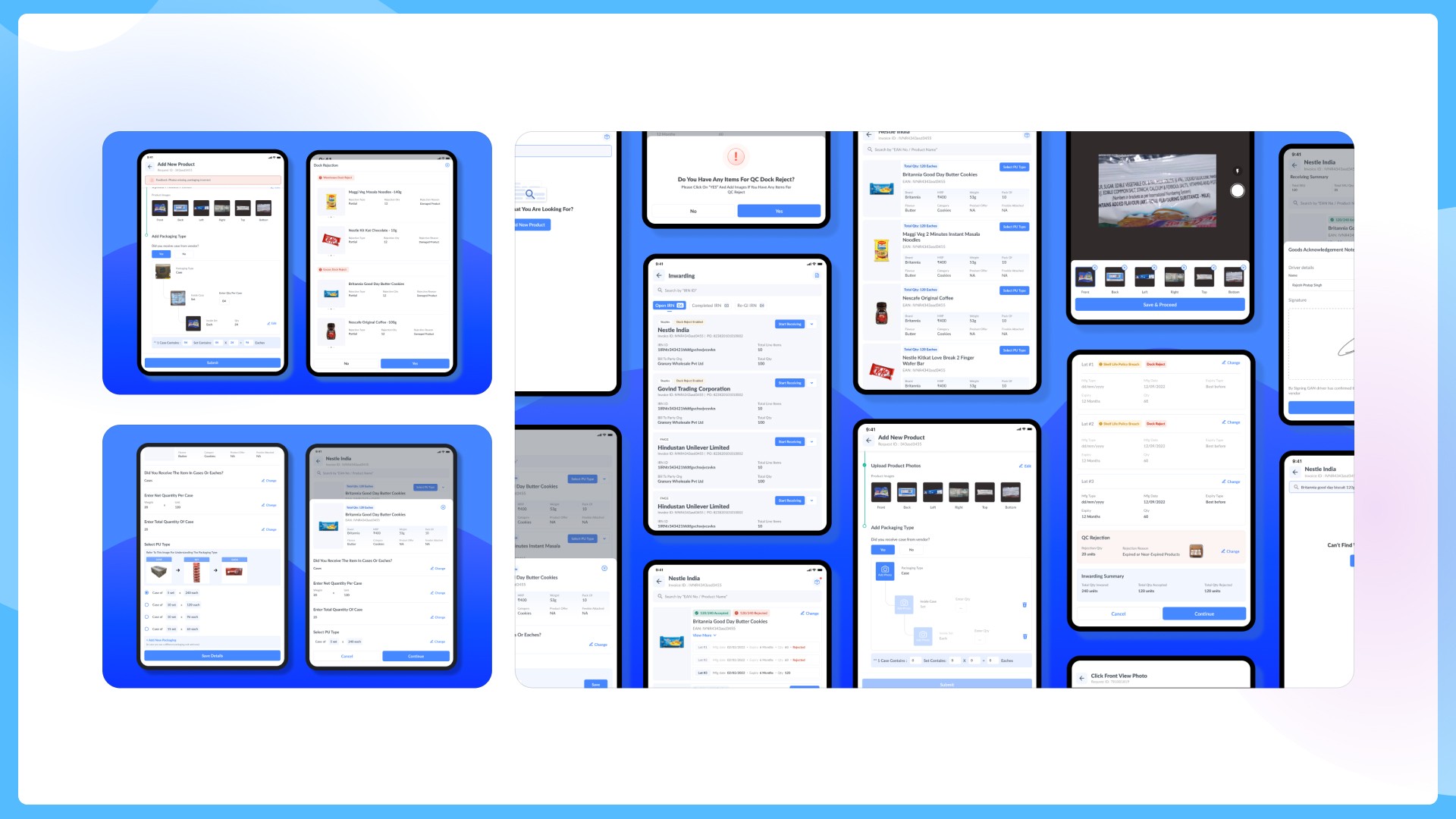
Explored multiple layout options to boost efficiency and accessibility.
Refined navigation, component hierarchy, and task flow for better usability.
Ran quick in-warehouse tests to validate ease of use before finalising designs.
[Outcome]
85% of products identified within 1 minute, up from 75% in the old system.
Processing times reduced by up to 30% across multiple warehouses.
Achieved a 6/7 usability score (SEQ) from 23 inbound executives nationwide.
[Key Learnings]
UX is beyond screens
It’s not just about designing interfaces; it’s about transforming the entire user journey, as seen in warehouse receiving.
Understanding technical processes is key
Investing time in learning complex workflows, like warehouse receiving, ensures the design is functional and impactful.
Adoption is as important as design
Even the best solutions fail if users don’t embrace them, so usability testing is a must.